
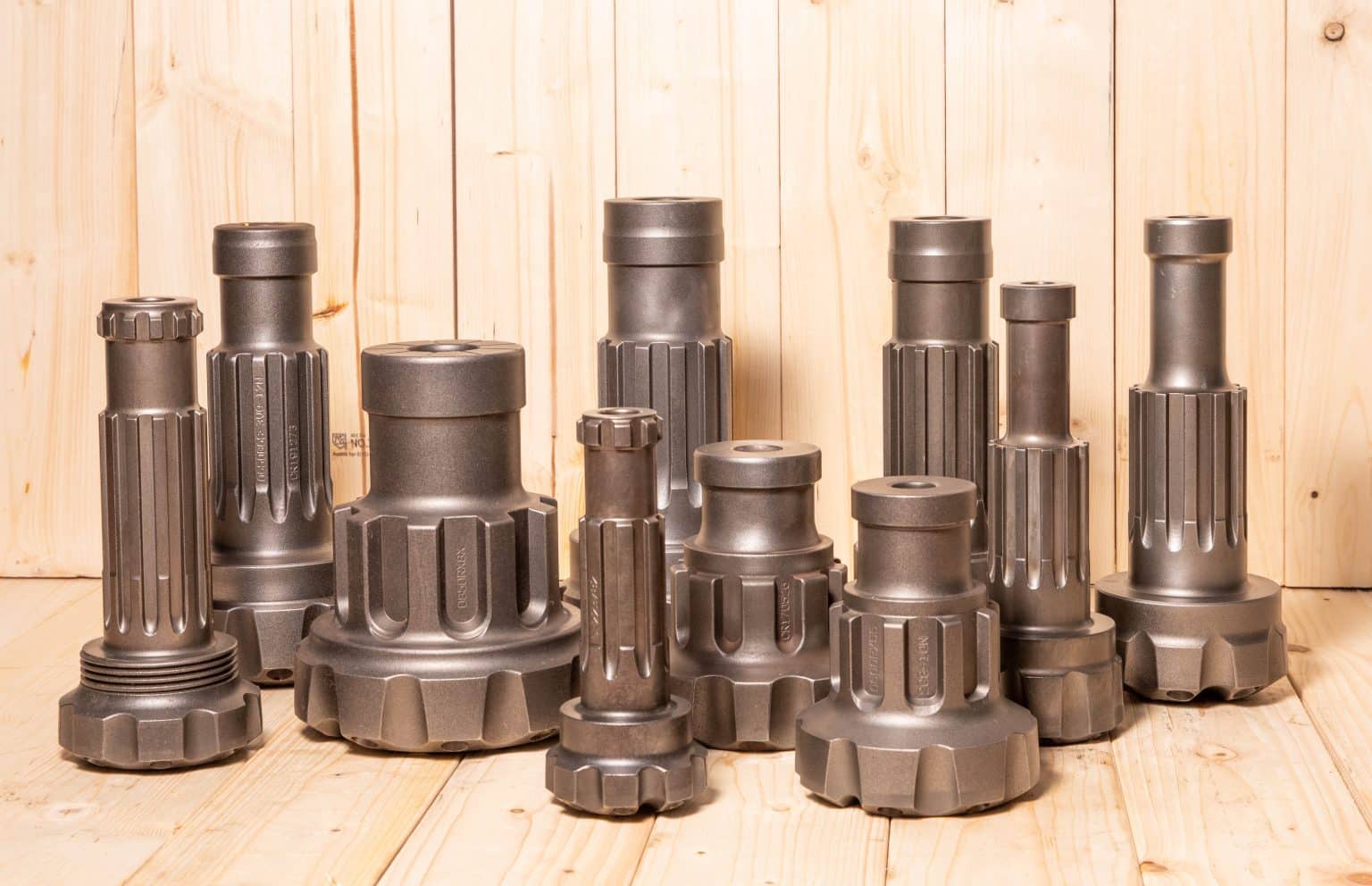
What Are Down-the-Hole Rock Drills?
Down the hole drills are the backbone of productivity in some of the most demanding drilling environments on earth — from quarries and mines to foundation sites, water wells, and horizontal directional drilling (HDD) operations. If your job involves rock boreholes, chances are DTH technology can make your work faster, straighter and more efficient.
In this article we’ll break down the mechanics of DTH drilling, highlight ideal use cases and show how Center Rock’s DTH product lines outperform the competition with American made reliability and engineering precision.
DTH Drilling — The Basics
At its core DTH drilling is a percussive system where the hammer — the mechanism that delivers impact — is located at the bottom of the drill string, directly behind the bit. This proximity delivers maximum energy transfer especially in deep or hard rock formations. The precision and efficiency with which boreholes are drilled using DTH systems highlight advancements in drilling technology allowing for better control and safety in various applications.
How It Works:
- Compressed air is pushed down the center of the drill pipe.
- The air powers a piston inside the DTH hammer.
- The piston strikes the bit hundreds of times per minute.
- The bit, which is rotating, breaks and chips away the rock.
- Air returns up the annulus, clearing cuttings from the borehole.
DTH Hammer drilling minimizes energy loss, ensures straighter holes and maintains efficiency regardless of hole depth — key advantages over top hammer drilling.
Key Components of a DTH Drilling System
Understanding the system as a whole helps in selecting the right DTH tools for the job. A typical DTH setup includes:
1. DTH Hammer
The main driver of percussive energy is the DTH drill, a hardened steel, pneumatic tool driving a carbide button bit designed to drill efficiently in any geologic conditions. Center Rock offers hammer models that will drill diameters from 3.5” to 48” as well as specialty hammers for specific applications such as HDD (horizontal directional drilling).
2. Drill Bit
The business end of the system. Center Rock manufactures down-the-hole drill bits for all applications and formations with optimized head length and aggressive cutting structures. With dome, flat face and concave face profiles for speed, hole cleaning and wear resistance, Center Rock has the perfect bit design for your job.
3. Drill Pipe
Connects the hammer to the surface rig and delivers air as well as rotation. Pipe diameter, thread type, and the DTH hammer must be properly sourced to ensure efficient drilling to meet the specific drilling requirements of the project.
4. Compressor
Supplies the high-pressure air. Required CFM and PSI vary by hammer size and formation. The compressor’s air supply is critical to optimize performance, to ensure the efficiency and proper operation of the DTH system.
Types of Drilling Tools
In the drilling industry there are many tools used to meet the various demands of rock drilling and mineral exploration. Among these DTH hammers & bits stand out for their ruggedness and performance.
DTH hammers are the heart of the DTH drilling system, delivering powerful percussive energy to the drill bit. This method ensures high performance especially in large diameter holes and deephole environments. HDD hammers are specially designed for horizontal directional drilling and can operate in challenging environments where precision and reliability is key.
DTH bits available in various profiles such as dome, flat face and concave are engineered to optimize speed, hole cleaning and wear resistance.
Drill pipes play a critical role in transmitting rotation and feed force to the down hole hammer as well as high pressure air to operate the DTH Hammer.
Together these tools form a comprehensive suite to tackle the toughest drilling challenges with high performance and efficiency.
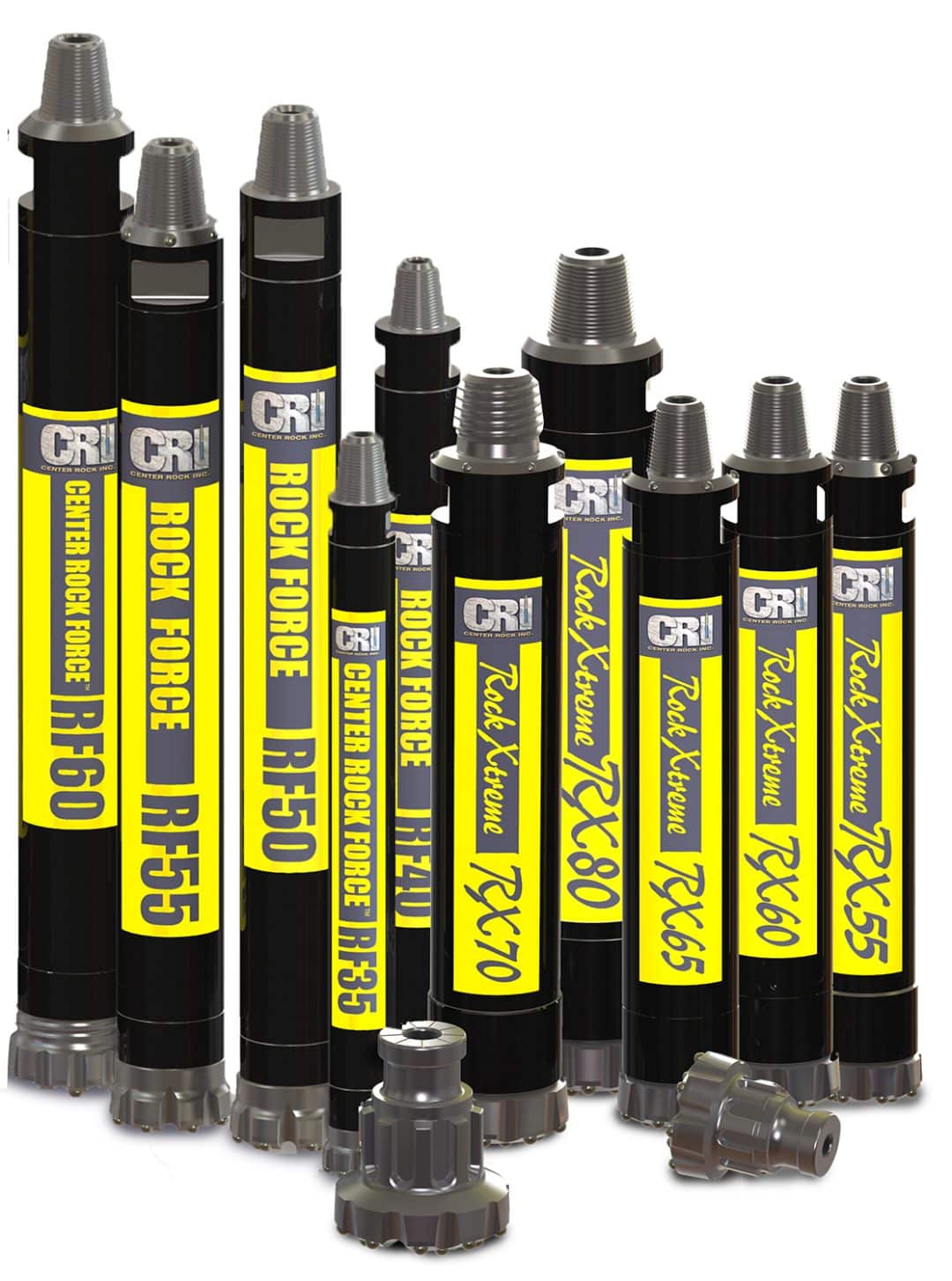
Features of Drilling Equipment
Drilling equipment is designed to perform reliably and at peak efficiency in all drilling applications. Performing the most work are DTH hammers with a robust hammer body that guides the drill bit straight and stable ensuring precise and efficient drilling even in the toughest conditions.
Drilling tools are made from high quality materials like alloy steel to ensure durability and longevity. This hardened material extends the life of the tools and also withstands wear from hard rock formations.
DTH drills are designed to be effective with high penetration rates in tough rock. The combination of efficiency and durability makes quality drilling equipment essential to the industry for reliable performance and results.
Benefits of DTH Drilling
DTH drilling stands out in many ways and it improves efficiency in most drilling applications. Collaboration with drillers has been key in developing rock drilling product designs through innovation and configuration.
Better Energy Efficiency
Since the hammer is at the bit, there’s no energy loss through the drill pipe — unlike top hammer drilling systems.
Straight Hole Accuracy
Ideal for applications where hole deviation is unacceptable — such as blasting, pile foundations or gas wells.
High Penetration Rates in Hard Rock
Whether it’s granite, basalt or quartzite, DTH systems work where rotary or auger drills fail.
Versatile Hole Sizes
From small-diameter production holes to large-diameter caissons, Center Rock offers tools from 3.5” to 144” — no one else has that breadth.
Industry Applications
DTH products are part of specialized drilling systems used across multiple industries, each with its own requirements:
Construction & Foundation Drilling
- Micropiles
- Caissons
- Foundation supports
- Bridge and road work
Tool Highlight: LP DRILL® systems for low-clearance or limited-access jobsites.
Mining & Quarrying
- Blast hole drilling
- Bench drilling
- Production drilling
- Shaft and burn holes
Tool Highlight: RX Series hammers for production drilling in hard rock with high blow energy per pound.
Oil & Gas / Geothermal
- Underbalance gas well drilling
- Loop drilling
- High volume water wells
Tool Highlight: RF Series hammers for peak production drilling in deephole environments.
Horizontal Directional Drilling (HDD)
- Utility line boring
- Crossings under roads or rivers
- Pipeline bores
Tool Highlight: Center Rock HDD hammer system, steerable and designed for precision holes.
Center Rock’s DTH Products
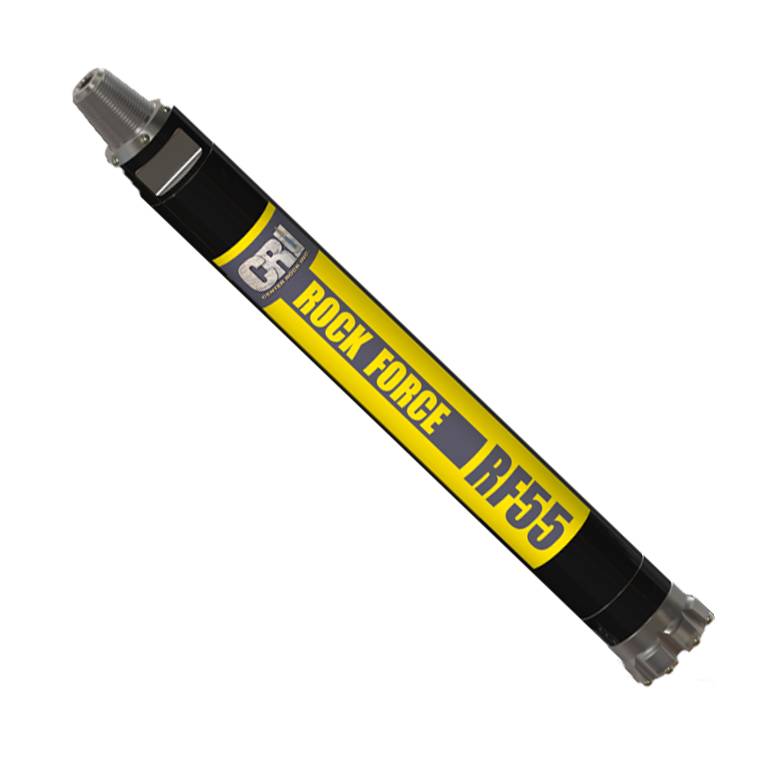
RF Series Hammers
Our flagship hammers offer a balance of performance, reliability and serviceability. Designed for contractors who demand consistent output and long tool life.
- Sizes: 3.5” to 36”
- Applications: Quarry, mining, general construction
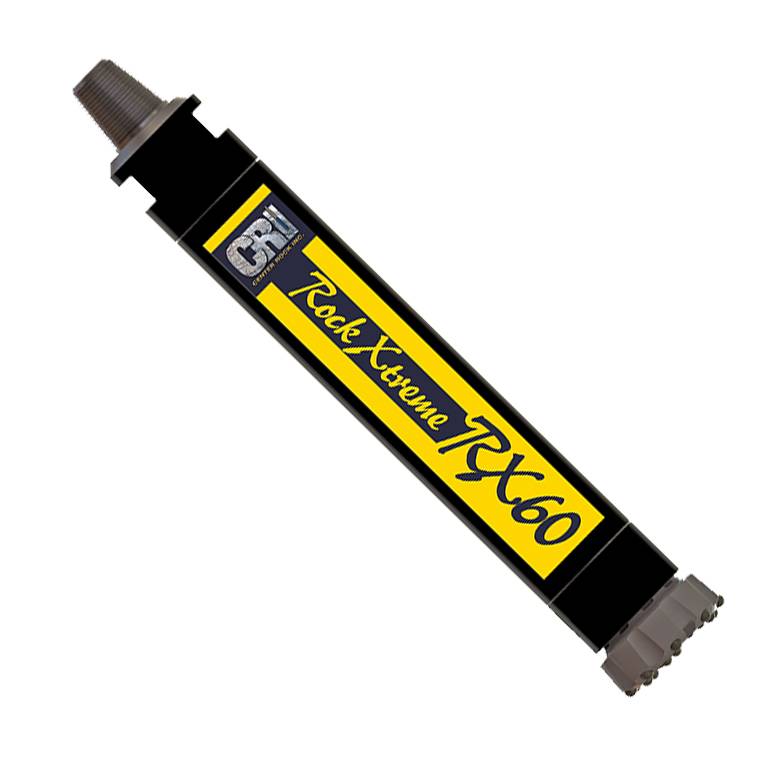
RX Series High-Frequency Hammers
For all formations, these hammers operate at higher impact frequencies, ideal for fast penetration in all rock types.
- High energy blow rates
- Optimized piston-to-bit weight ratio
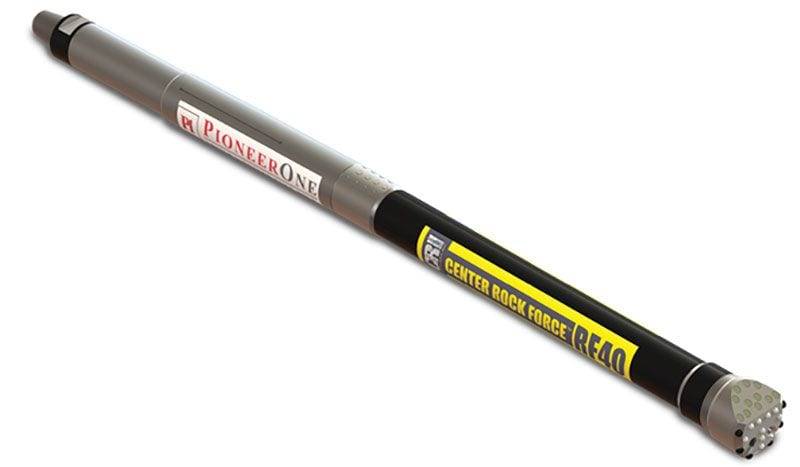
HDD Hammers
Directional drilling requires tools that steer and cut with precision. Our HDD systems are designed for trenchless boring in solid rock, with minimal deviation and maximum productivity.
- Built-in steering capacity
- Range of pilot bits

Bits, Breakout Systems and Accessories
- Bit types: Dome, Concave, Flat Face & more.
- Hydrojaw breakout benches for easy tool maintenance
- Biodegradable oils, thread adaptors and wear parts in stock
Maintenance of Drilling Equipment
Maintenance is key to get the best out of drilling equipment. Proper maintenance not only extends the life of the tools but also ensures they operate at maximum efficiency. DTH hammers for example require regular maintenance to maintain impact energy and drilling speed. Repair of drilling tools should be done by experienced technicians who can get them back to original condition. This way the tools will continue to perform and operate efficiently. Drill pipes should be regularly inspected for damage and wear. Replacing worn out pipes prevents downtime and maintains the integrity of the drilling operation.
Proper storage of drilling equipment when not in use is also important. This prevents damage and extends the life of the tools, so they are ready for the next job. By following maintenance and repair practices operators can keep their equipment in top condition, ready to tackle any drilling challenge.
Troubleshooting
Drilling equipment can encounter common issues that affect performance. One of them is low air volume/pressure which can cause poor performance or low penetration rates. Make sure the air supply system is working correctly to mitigate this problem.
DTH hammers can have issues with low pressure and hammer performance due to internal wear on tight tolerance parts which can affect the drilling process. Regular maintenance and timely replacement of worn parts can maintain optimal performance.
Drill bits can wear out or get damaged over time and reduce drilling performance. Regular inspection and replacement of drill bits is essential to maintain drilling efficiency. Bit longevity can be enhanced through proper maintenance and repair.
Drilling tools also require regular cleaning and maintenance to prevent downtime or lost production. By addressing these common issues promptly operators can maintain the performance and reliability of their drilling equipment.
Real-World Proof — Chilean Mine Rescue
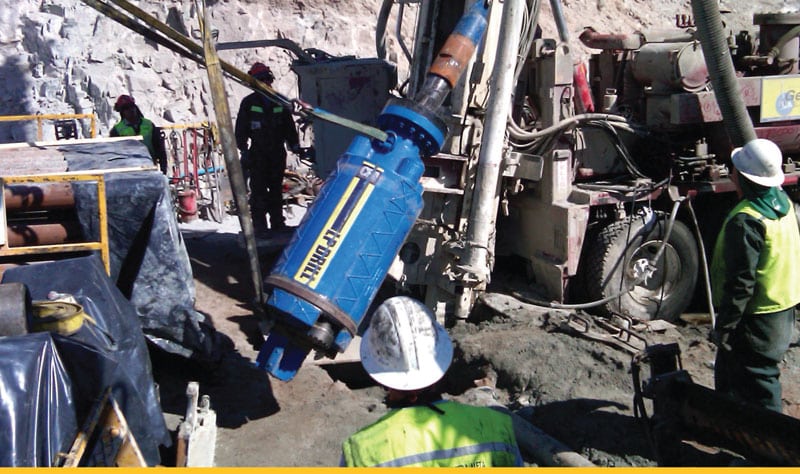
Center Rock’s DTH expertise isn’t just theoretical — it saved lives. In 2010 during the San José mine collapse in Chile our CR120 hammer and LP DRILL® system was part of “Plan B” — the successful rescue of 33 trapped miners.
Our tools bored a 26” hole through 2,000+ feet of rock faster than expected — global recognition and proof of what DTH technology can do when lives are on the line.
DTH hammers can have issues with low pressure and hammer performance due to internal wear on tight tolerance parts which can affect the drilling process. Regular maintenance and timely replacement of worn parts can maintain optimal performance.
Drill bits can wear out or get damaged over time and reduce drilling performance. Regular inspection and replacement of drill bits is essential to maintain drilling efficiency. Bit longevity can be enhanced through proper maintenance and repair.
Drilling tools also require regular cleaning and maintenance to prevent downtime or lost production. By addressing these common issues promptly operators can maintain the performance and reliability of their drilling equipment.
Choosing the Right DTH Solution
What to consider:* Rock type (hard, fractured, abrasive)
- Hole diameter
- Depth of drilling
- Deviation tolerance
- Site access and equipment capacity
At Center Rock we don’t just ship tools — we partner with our customers to engineer the right setup for their specific conditions.
Need help choosing a hammer or bit? Contact our technical team for expert advice based on decades of drilling experience.
What’s Next
The drilling industry is about to see significant advancements in technology and equipment in the coming years. DTH drilling tools will continue to play a key role, with ongoing innovations focused on high performance and efficiency.
Drilling equipment will be optimized for specific drilling applications. This will include geothermal drilling and mining where precision and performance matter. Tools will be more efficient and more adaptable to different drilling conditions.
Oil & gas and construction will also benefit from these advancements with a focus on reliability and longevity. As the demand for sustainable energy and infrastructure grows the need for advanced drilling equipment will increase.
Overall the future of the drilling industry looks bright with continuous improvements in technology and equipment driving better performance and efficiency across all sectors.
Built for the Toughest Jobs
DTH drilling is more than a method — it’s a strategy for high-efficiency, high-precision rock penetration. With Center Rock’s hammers, bits and support systems you get equipment that’s engineered, tested and proven on job sites around the world.
Whether you’re drilling shallow or deephole, in shale, granite or glacial till — Center Rock has the DTH solution that’s built to perform.